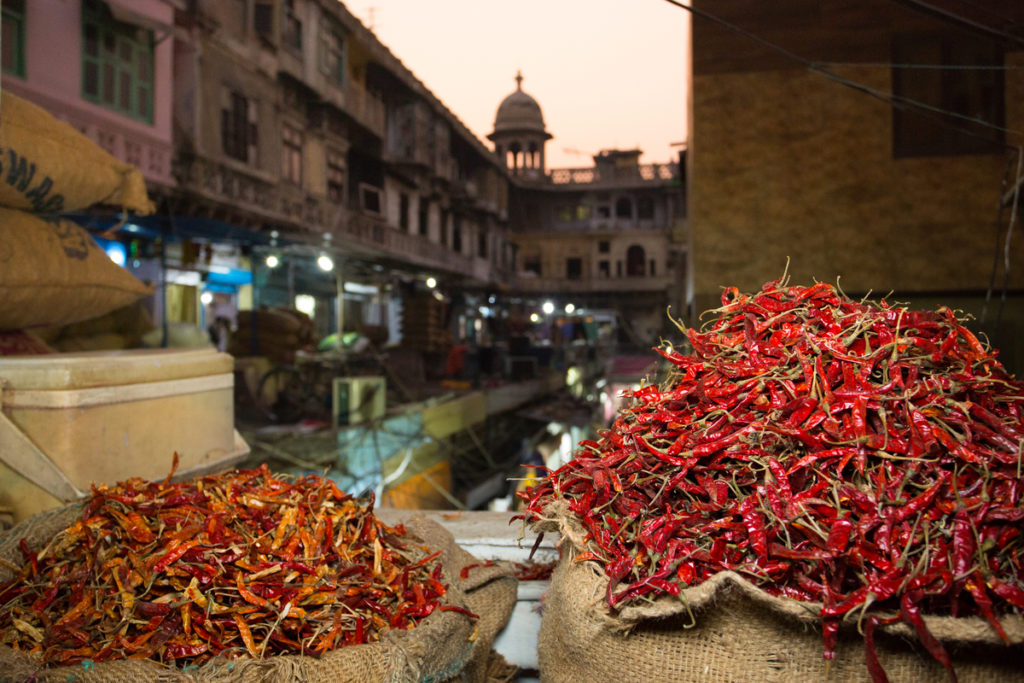
Walking through the lanes of Old Delhi is a treasure trove of the city’s pre-colonial history. Right opposite the grandiose Fatehpuri Masjid at the western end of the chaotic Chandni Chowk is one of India’s oldest markets, labelled Gadodia Market. As you enter the bazaar early in the morning, the air burns faintly of chillis, of earthly sweetness of cardamon, and warmth of cloves. Porters weave through the crowd with sacks on their backs, shopkeepers shout out prices, and buyers smell and inspect the spices, like it’s a ritual. You have entered the city’s oldest living marketplace in Khari Baoli. Established in the 17th century during the Mughal era, Khari Baoli’s narrow steps have been seeing the trade of spices for over 400 years, long before Delhi became Old and New Delhi. Today, it is Asia’s largest and oldest spice market.
Khari Baoli Spice Market, Old Delhi
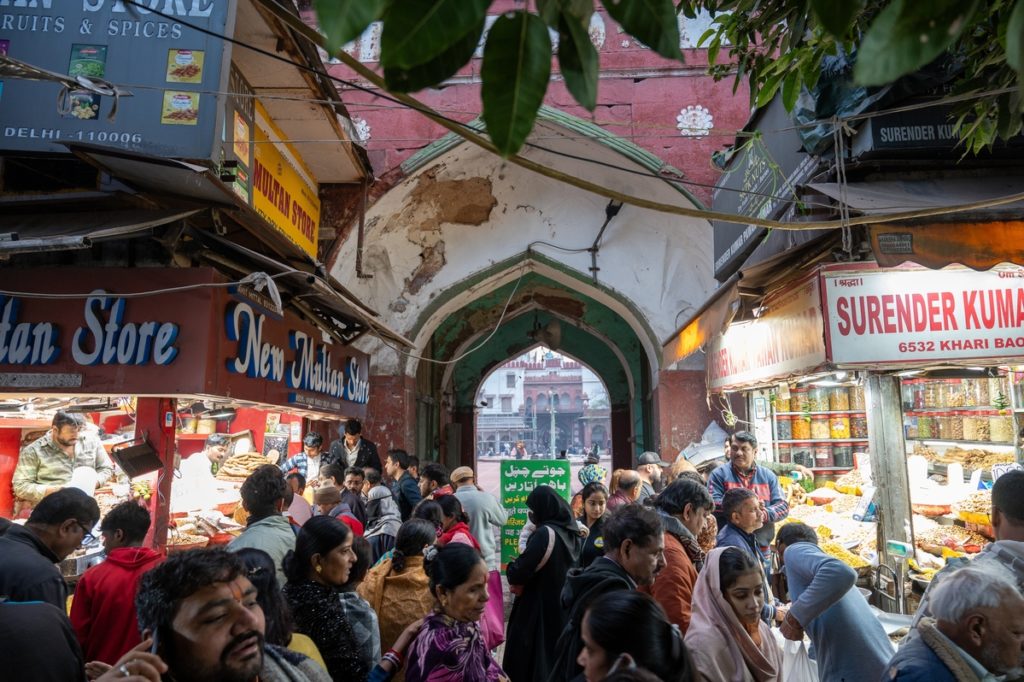
If you thought it was a tourist spot, you are deeply mistaken. The morning, especially, is all about the local chaos of everyday selling and buying of the freshest and most exotic spices. Through the crowds of this hustle, you will spot ardent photographers, doting chefs, and a few first-time tourists trying to skuttle past.
It wasn’t always like that. Built in 1551 during the reign of Salim Shah, son of Sher Shah Suri, Khari Baoli was a stepwell built as bathing spot for travellers and their animals coming to Delhi. ‘Khari‘ literally means ‘salty’ and ‘baoli‘ is a stepwell. Unlike other sweet water wells, Khari Baoli was a service station. Located close to the Fatehpur Mosque, built during the Mughal emperor Shah Jahan‘s reign, it became a key spot for trade that came from the Silk Road. By the 1930s, the physical stepwell was overrun by shops.
Today, there may not be a trace of water or the original well, but it continues to be a treasure trove of spices for culinary specialists and enthusiasts. A peek into the Gadodia market is all you need to understand why India is termed ‘the land of spices’.
Land of Spices
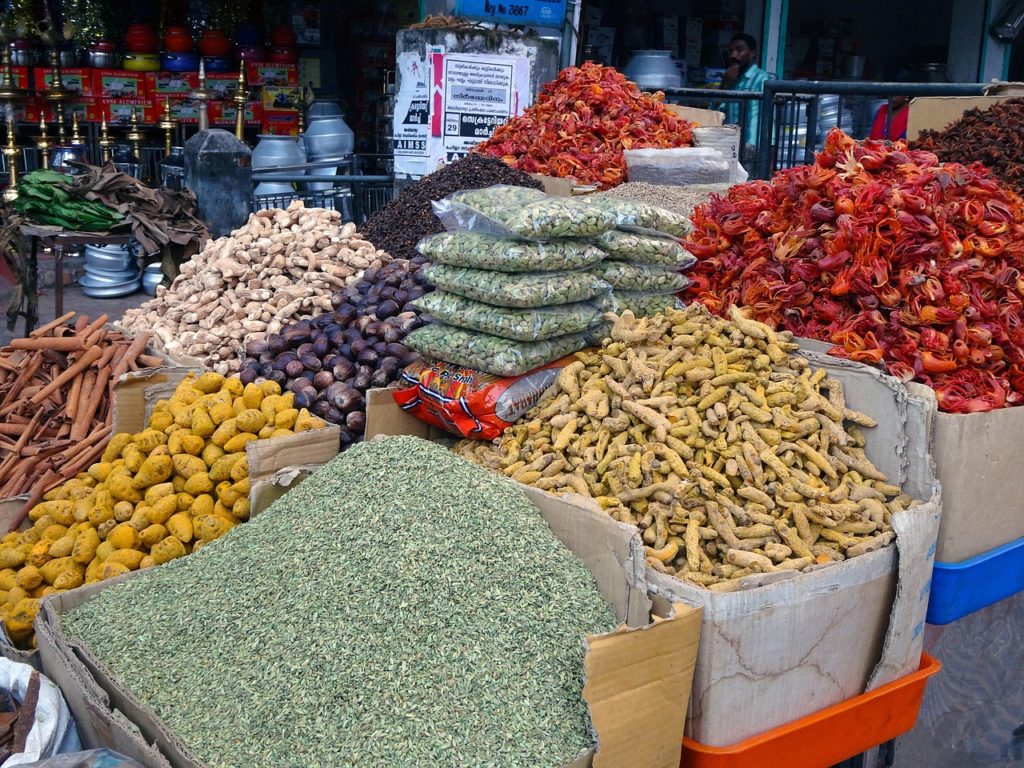
As expected from a spice market, Khari Baoli is a smörgåsbord of aromas from every direction. It is not just a heritage site but a working wholesale market that has orderly trading every day. This is where restaurateurs, traders, and chefs come to buy everything from every local masala to exotic saffron. Most shops are caved in by huge sacks of turmeric, cinnamon, cardamom, and cloves. Moreover, saffron is bought in grams. It is truly a Pandora’s box, hiding exotic herbs, dried flowers, nuts, teas, and medicinal Ayurvedic herbs from across India and beyond. Additionally, for any perfume lover, shops like Mohan Ji Attar Wale and Japan Bottle House house celebrated collections of rare and exotic attar and essential oils.
Many shops here have been running for over nine generations. While some sell you souvenirs and daily items, most shops here thrive in bulk selling with massive handscales. A trip here becomes a fascinating mayhem of witnessing age old culture of trading in Delhi. Many shops continue to retain the names that have been used since their setup. Each spells its own piece of history.
High Above Khari Baoli
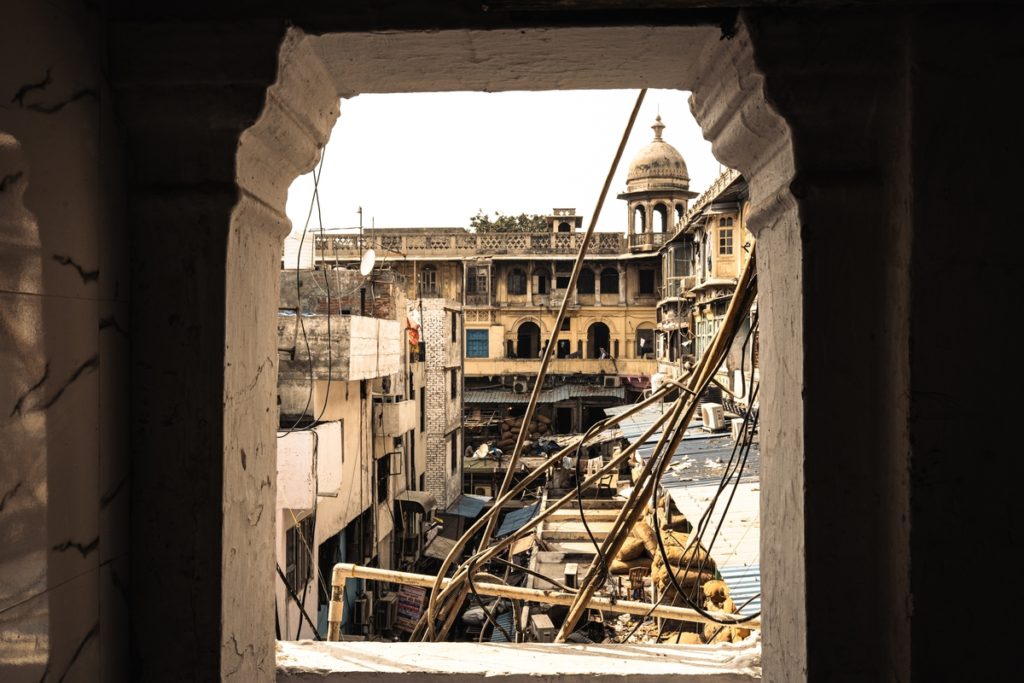
The real surprise, however, lies in the swirling narrow staircases inside the Gadodia Market complex. They say that the left-hand corner of the courtyard hides a four-storeyed staircase. Mostly used by porters and merchants, you can ask anyone for directions. Above four flights of stairs lies a small old rooftop. But the view it provides is one of historic grandeur. A world away from the frenzy below, the panoramic view of Old Delhi with its domes, minarets, and tangled lanes defines the very rawness of what the city is and was.
Pro-tip: Carry a mask and be careful of the sneezes (spice burn is real!). Also, be polite when asking traders and merchants; they are working on their everyday livelihoods.
Key Information
⏰Monday to Saturday, 10 AM to 7 PM (Time varies with shops)
📍North of Fatehpur Mosque, Western End, Chandni Chowk, Old Delhi