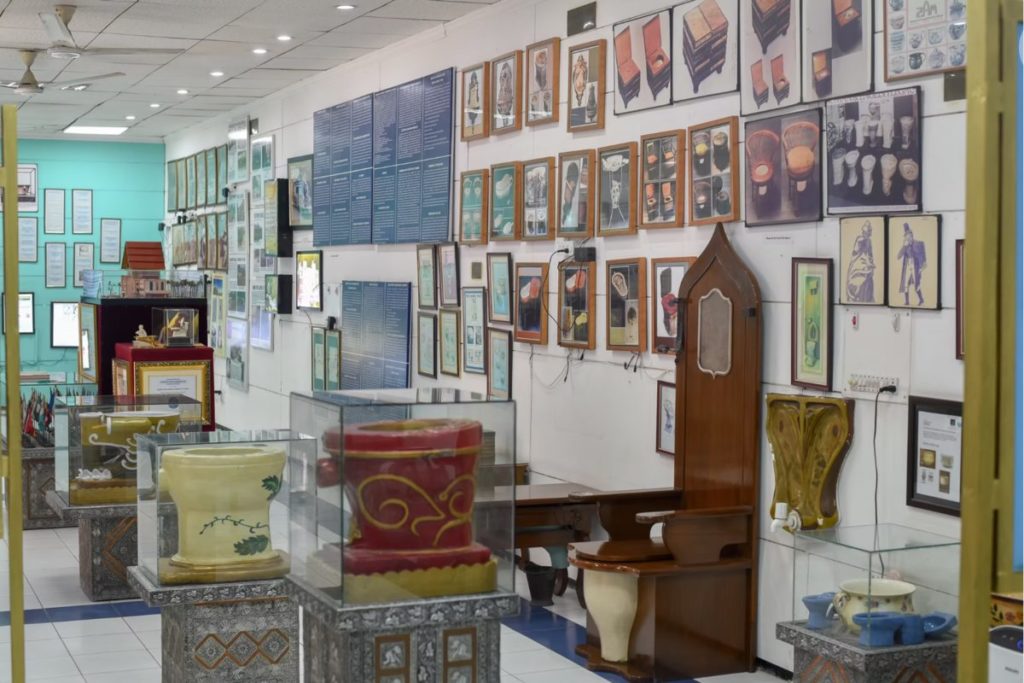
Most people aren’t all that surprised when we say we found something weird in Delhi. Yet, we have found something that will make you go “Whoa, I didn’t know this needed a museum.” The brainchild of Dr Bindeshwar Pathak, a renowned sociologist and social activist, the Sulabh International Museum of Toilets is certainly one of its kind. For us who use a bathroom regularly (we hope), it is quite easily missable how the innovation of the toilet has influenced the way we view health, hygiene, and even vanity. Yet, an innovation born out of a biological need is riddled with social norms, cultural cues, and silent etiquettes. Noting the chronological journey into the evolution of toilets, the museum takes us through a five-thousand-year-old history of sanitation. All week long, it invites visitors, free of charge, to venture into the world of toilets.
Inside The Museum Of Toilets
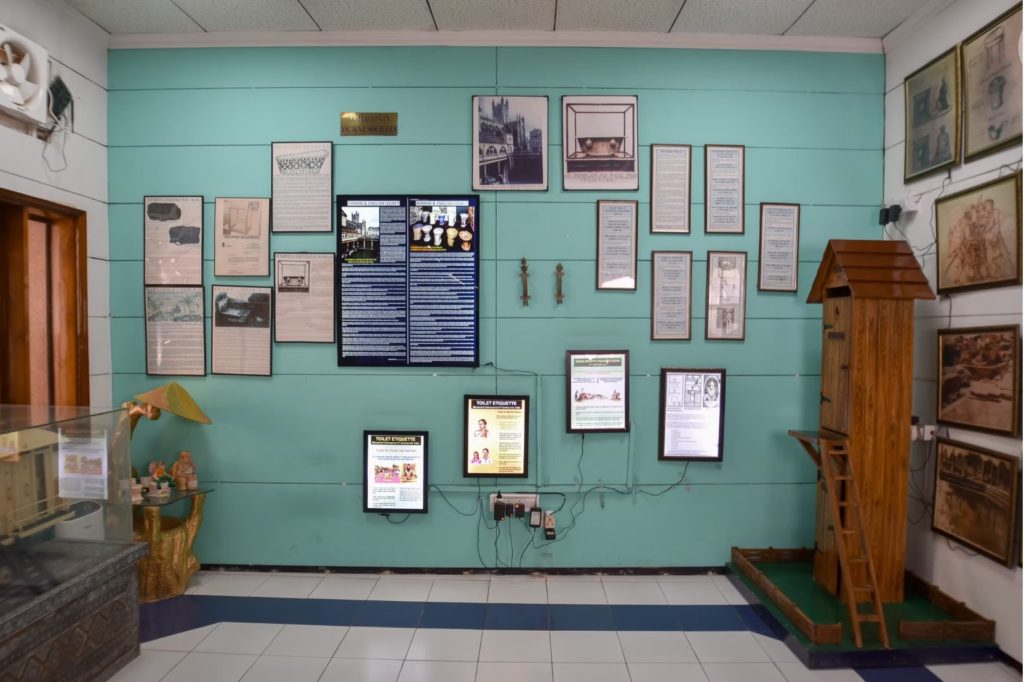
Perhaps we made it sound a bit bookish with our introduction. It isn’t just about the dates and details; the Museum of Toilets houses an extensive collection of rare facts, pictures, and objects dating back to 2500 BC. Housing a detailed account of sanitary developments, it gives an insight into toilet-related social customs, etiquette, prevailing sanitary conditions, and legislative efforts of different times, and around the world. Moreover, there are intriguing displays of privies, chamber pots, toilet furnitures, bidets, and water closets in use since 1145 AD to today. The highlight of the attraction is probably the ornately painted urinals and commodes. Not to forget, there is an amusing replica of a medieval mobile commode in the shape of a treasure chest. It was supposedly used by the English while on their hunt.
Or, perhaps you’d be more interested in taking a look at the gold and silver-embellished toilet commodes specially made for Roman emperors. Yet, our personal favourite is the accompanying ensemble of poems dedicated to toilet usage.
In addition, the Museum of Toilets hides the rare record of the flush pot, devised in 1596 by Sir John Harrington, as well as the advanced sewerage system of the Harappan Civilisation dating back centuries. Piece by piece, anecdote by anecdote, the museum unravels the cultural history of the underrated toilet.
Menstrual Hygiene Management Centre
The campus is also home to a Menstrual Hygiene Management (MHM) Knowledge hub. Inaugurated in 2024, the space is dedicated to fostering education, advocacy, and research on menstrual hygiene. As a visitor, you can take a unique guided tour into the life of a menstruator, myths, realities, support systems, and a step towards breaking the period stigma.
Why?
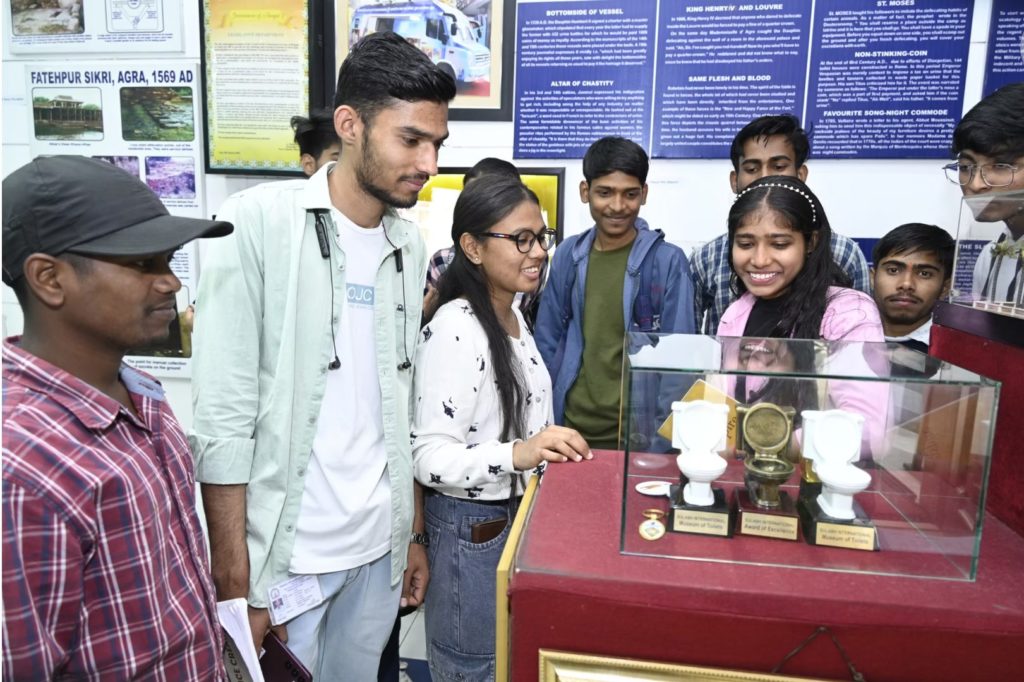
Beyond its quirky subject, the museum and its efforts are part of a broader social and educational mission. With its documented global history of sanitation systems, the efforts are to normalise the conversations around toilets and hygiene. It breaks the barrier of vanity and invention while presenting sanitation as a basic human need with socio-cultural implications. The Museum is part of the Sulabh International Social Service organisation that aims to inspire innovation and policy understanding.
It has been instrumental in helping develop low-cost technologies, end hazardous manual scavenging, and addressing other human rights implications. The existence of the museum is a testament to how far human civilisation has come and how far it has to go while learning from history to create sustainable solutions. A toilet is not trivial but an integral part of a larger health, community, gender, education, a nd human rights conversation.
Key Information
⏰ Monday to Saturday (10:30 am – 6 pm), Sunday & Holidays ( 10 am to 5 pm)
Closed on National Holidays
🎟️Free
Get your tickets here
🅿️ Free
📍 Sulabh Bhawan, Mahavir Enclave, New Delhi
You can choose to walk around on your own or take a guided tour.