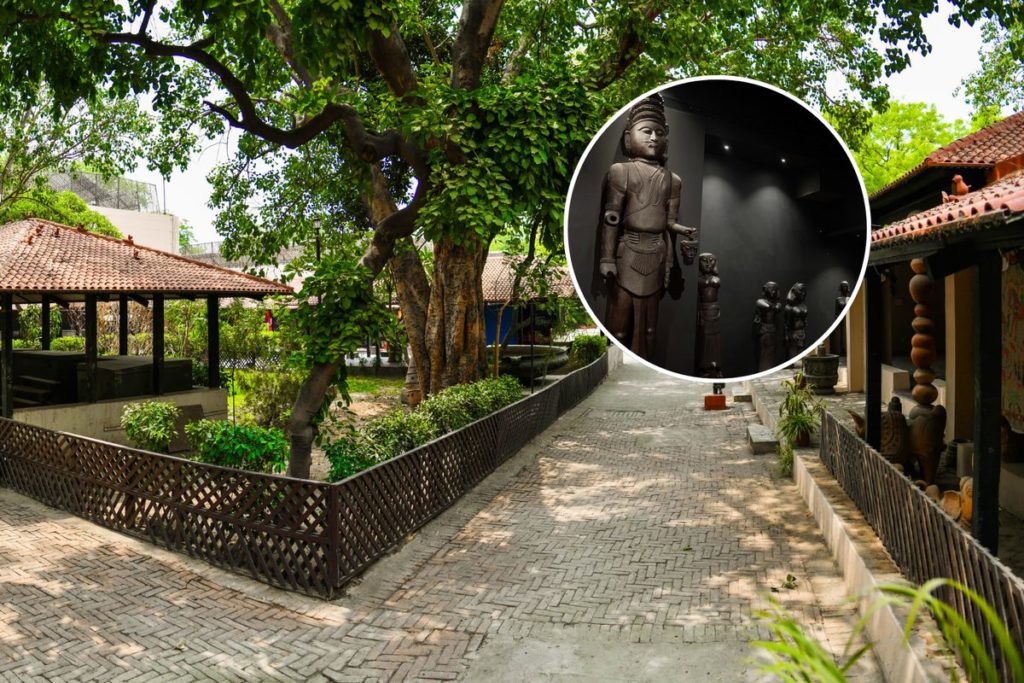

Delhi has always been more than luxury malls, viral cafes, renowned street eats, and fancy walkways. The capital carries aeons of history and culture, from the mythical grandeur of Indraprashtha and the Mughal capital of Shahjahanabad to becoming the colonial capital of the British Empire and then to the Delhi NCR as we know it today. It has always remained the capital of a country so diverse. It is only natural that poetry, art, and traditions flow through the very bricks of the capital like memories. Showcasing this vast artistic diversity is the National Crafts Museum & Hastkala Academy, tucked at the corner of Pragati Maidan. Designed by the legendary Indian architect Charles Correa, the museum celebrates the majestically rich and diverse craft and weaving traditions of India, with heritage artefacts, collections, open-air showcases, and a plethora of workshops. Moreover, the entry to explore India’s visual repository is completely free.
The National Crafts Museum & Hastkala Academy
Run by the Ministry of Textiles, Government of India, the history of the National Crafts Museum is layered like Delhi itself. Originally set up in 1956 at the Regal Building, Janpath, it was later moved to Thapar House. Furthermore, it was shifted to its present location in phases from 1977 to 1980. Sprawled in an area of 20,000 sq metres, Charles Correa designed the building too in phases, from 1977-80 and then from 1987-1990. Finally, the Crafts Museum was renamed to the National Crafts Museum & Hastkala Academy in 2019.
Currently, the museum houses over 30,000 traditional artefacts such as folk/tribal paintings, wooden works, sculptures, exquisite textiles from Kalamkaris to Pashmina shawls, heritage embroidered fabrics such as Kantha, Chikankari, Ikat, Jamdaani, and more. Each has been acquired over the course of 70 years from various states in India.
What to see inside?
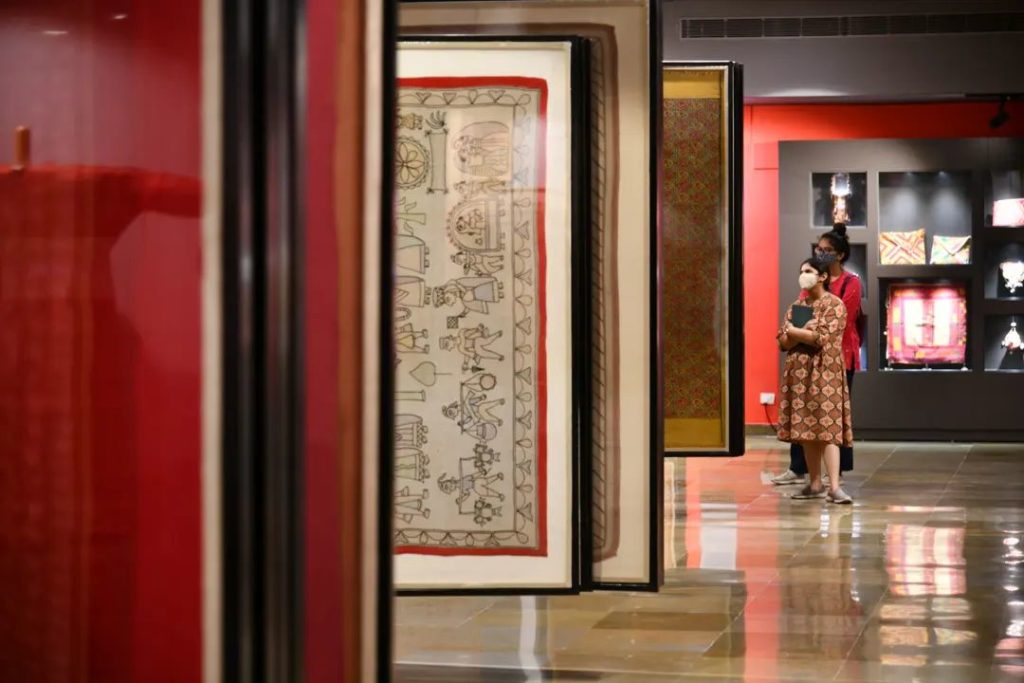
The collection inside is separated into different galleries. The Textile Gallery hosts an extensive collection of traditional Indian textiles, covering a range of hand-woven and handcrafted techniques. These techniques have continued to be practised generationally across India. Moreover, the Courtly Craft Gallery situated inside a traditional Indian house with jharokas features showcases the exquisite craftsmanship and precious materials created for traditional homes and palaces of the nobility. Then, the Cultic Gallery showcases sculptures, paintings, textiles and other artefacts associated with the rituals of the diverse religions in India. A rather special gallery of Bhuta, the Bhuta Gallery features a set of unique sculptures from the Bhutacult from coastal Karnataka, made from the wood of the Jackfruit Tree, created for ancestral worship by the Tulu community. Interestingly, the museum features the largest Bhuta collection in the world.
Finally, the Folk & Tribal galleries pay a nod to the diverse indigenous tribes that make up the country with displays of paintings, masks, puppets, cow dung figurines, ornaments, cane accessories, clay & terracota works, and dokra art.
Village Complex
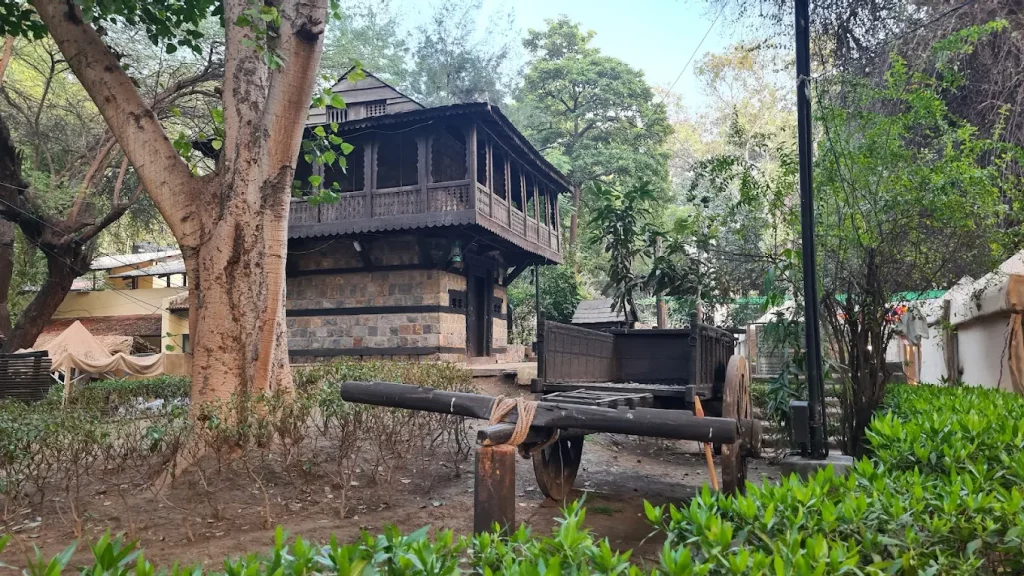
Yet, one of the highlights of the museum is the Village Complex, which recreates a traditional old school map of countryside Indian dwellings. Set up in 1972 as Rural India Complex, it was designed by the architects Ram Sharma and sculptor Sankhu Chaudhuri. The 19 structures comprise village dwellings and huts showcasing the diversity in living across states, courtyards, and shrines. This facsimile is carefully made with skills & materials to recreate and showcase the vast diversity in cultures, religions, and traditions across the 29 states that make India so unique. In a country where language, food habits, and traditions change every hundred kilometres, the Village Complex brings together the irony that allows Indians to see the uniqueness in their own differences.
Crafts Demonstration Programme (CDP)
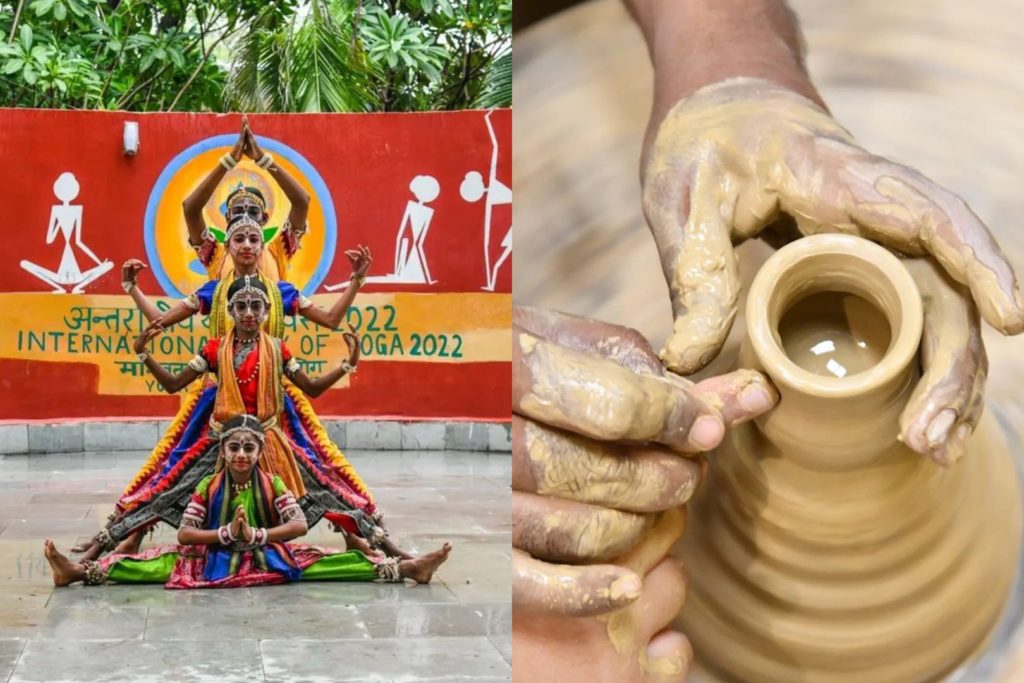
The CDP is what makes the museum one of a kind. This monthly promotion brings together artisans and performers from across the country. Via the Artisans at Work programme, you can watch artisans and weavers live in action, unravelling tools, techniques, and strokes passed down for generations. With weavers skillfully handcrafting and weaving using traditional handlooms, it is a reminder of the skills, effort, and generational knowledge that go into creating these marvellous pieces unique to India. Moreover, visitors can not only learn about these processes but also shop for souvenirs directly from the artisans. The programme is rather a quest to revive and preserve these endangered art forms. On the other hand, the complex also hosts folk performances with dance forms and folk art from across the country.
The National Crafts Museum further hosts regular interactive workshops and hands-on craft sessions. Here, visitors can learn the art of weaving, sculpting, and block printing directly from artisans themselves. With the growing love for pottery amongst the Gen Z, the museum provides regular hands-on pottery workshops for as low as ₹ 50/-, where you learn the craft directly from a local artisan. Be sure to catch the regularly updated calendars that feature short-term skill development and children’s workshop sessions.
Pro-tip
After a long day of walking around, do not forget to unwind at Café Lota. This open-air ethno-contemporary restaurant, surrounded by bamboo trellises and a traditional veranda inside the museum walls, serves lesser-known regional cuisine. Moreover, it serves artisanal coffees with beans sourced ethically from the Indian coffee capitals, as well as provides healthy twists on traditionally beloved street food. Do check out various seasonal pop-ups that bring special regional thalis and dishes here.
Key Information
📅 Tuesday to Sunday
⏰10 AM to 6 PM
💸Free Entry (Cafe prices: ₹ 1000/- for two)
📍Bhairon Marg, Pragati Maidan, New Delhi